
How to Transfer a Solar Loan When Selling Your Home
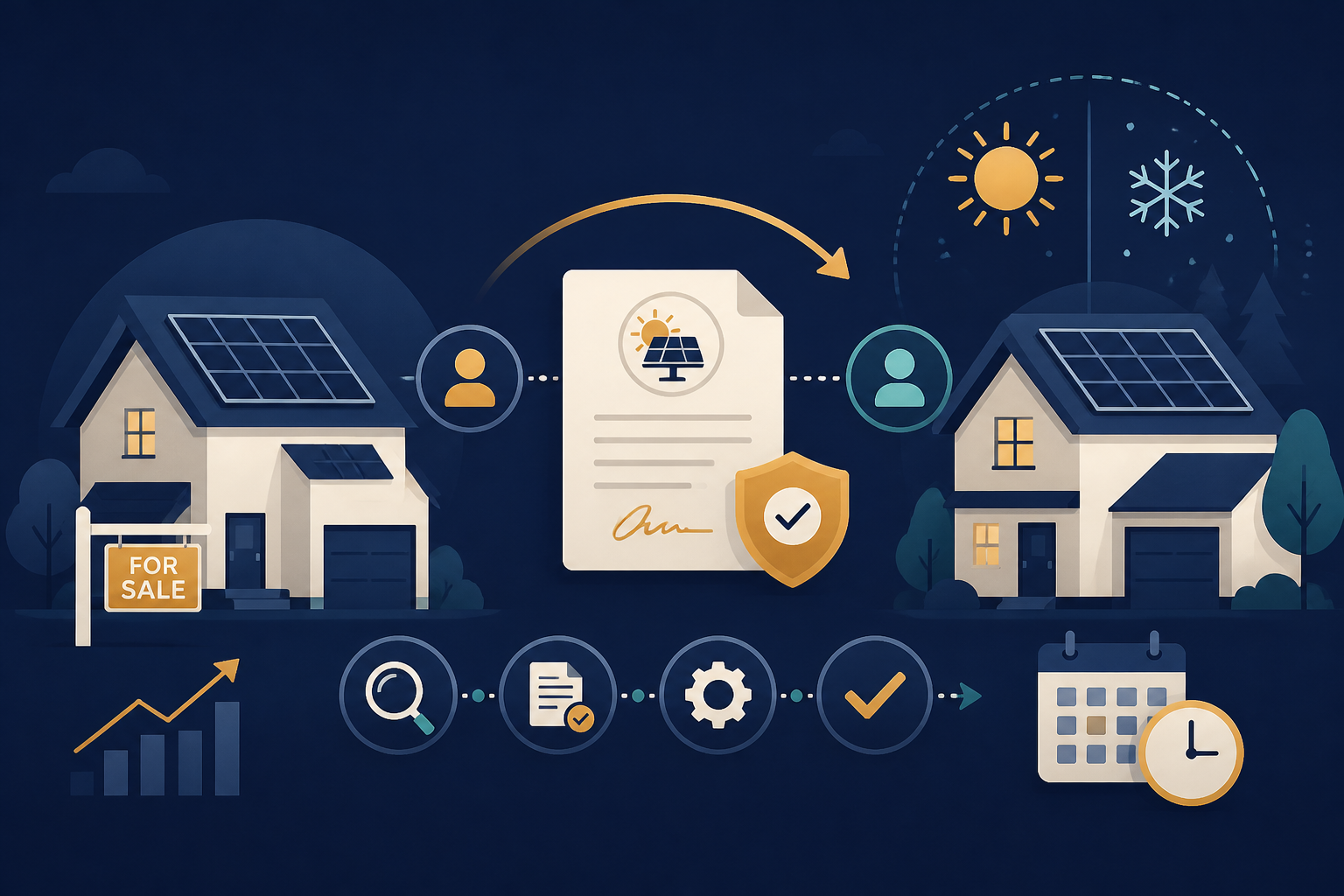
Don't let solar debt stall your home sale. Learn the exact steps to transfer your solar loan to a buyer and close your deal before the winter slowdown.
How to Transfer a Solar Loan When Selling Your Home This Fall
Selling a home in the fall requires a balance of speed and strategy. As the market begins to cool before the holiday season, homeowners with solar panels face a unique challenge: managing the remaining balance on their equipment. If you financed your system with a loan rather than paying cash, you need a plan for the debt before you head to the closing table.
For most sellers, the goal is a smooth transition where the buyer takes over the remaining payments. Navigating the solar loan assumption process real estate requirements is the key to ensuring your panels remain an asset rather than a liability during negotiations.
Understanding Solar Loan Assumption
Loan assumption is the legal process where a home buyer agrees to take over the existing terms, interest rate, and remaining balance of your solar financing. Instead of you paying off the entire balance (which typically ranges from $15,000 to $35,000 for a standard residential system) out of your home sale proceeds, the debt moves to the buyer's name.
This is a popular option in a high-interest-rate environment. If you secured a solar loan three years ago at 3.99% or 4.99%, that rate is likely much more attractive to a buyer than the 8% or 9% rates currently offered for new home improvement financing. Highlighting this can actually become a selling point for your property.
The Solar Loan Assumption Process Real Estate Steps
The solar loan assumption process real estate professionals recommend usually starts 30 to 45 days before your intended closing date. Here is the typical workflow:
- Lender Notification: Contact your solar lender (such as GoodLeap, Mosaic, or Sunlight Financial) to request an "Assumption Package."
- Buyer Qualification: The buyer must apply with your solar lender. They will undergo a credit check, usually requiring a FICO score of 650 or higher, depending on the lender’s specific criteria.
- Document Execution: Once approved, both parties sign an Assumption Agreement. This document releases the seller from future liability and transfers the UCC-1 fixture filing to the buyer.
- Escrow Coordination: The title company or escrow officer must receive confirmation from the lender that the transfer is approved before they can clear the title for the home sale.
Common Hurdles in the Fall Market
The fall real estate market is often defined by buyers who want to move in before the school semester ramps up or before the winter holidays. Delays in the solar loan assumption process real estate can jeopardize these tight timelines.
One common hurdle is the "UCC-1 Fixture Filing." Solar lenders place a lien on the solar equipment (not the home itself) to protect their collateral. During a title search, this filing will appear as a cloud on the title. If the lender is slow to process the assumption paperwork, it can delay the entire home closing. Starting the conversation with your lender the moment your home hits the MLS is the best way to prevent this.
Marketing Your Solar Panels to Fall Buyers
To make the loan transfer more palatable to a buyer, you must demonstrate the value of the system. In the fall, as daylight hours shorten and heating bills begin to rise in many parts of the U.S., the energy savings from solar become highly visible.
Provide the buyer with at least 12 months of utility bills showing the "before and after" of your electricity costs. If the monthly solar loan payment is $150, but the system saves the household $225 in electricity costs, the buyer is essentially gaining $75 in monthly cash flow. Frame the solar loan assumption process real estate as a way for the buyer to inherit an immediate monthly profit.
Alternatives to Loan Assumption
If a buyer is unable to qualify for the loan or refuses to take on the debt, you have two primary alternatives:
- Payoff at Closing: You can use the equity from your home sale to pay off the solar loan in full. This removes the lien and gives the buyer the panels free and clear. While this reduces your net profit, it is often the fastest way to close a deal.
- Seller Concessions: You might offer to pay the first 12 months of the buyer's solar loan payments as a closing credit. This can entice a hesitant buyer to agree to the assumption process.
Bottom Line
Successfully navigating the solar loan assumption process real estate requires proactive communication between you, your lender, and your buyer. By starting early and clearly documenting the energy savings your system provides, you can successfully transfer your solar debt and close your home sale before the end-of-year slowdown. Always consult with your real estate agent and tax professional to ensure the transfer aligns with your financial goals.