
Solar Production Guarantees: When the Sun Doesn't Pay
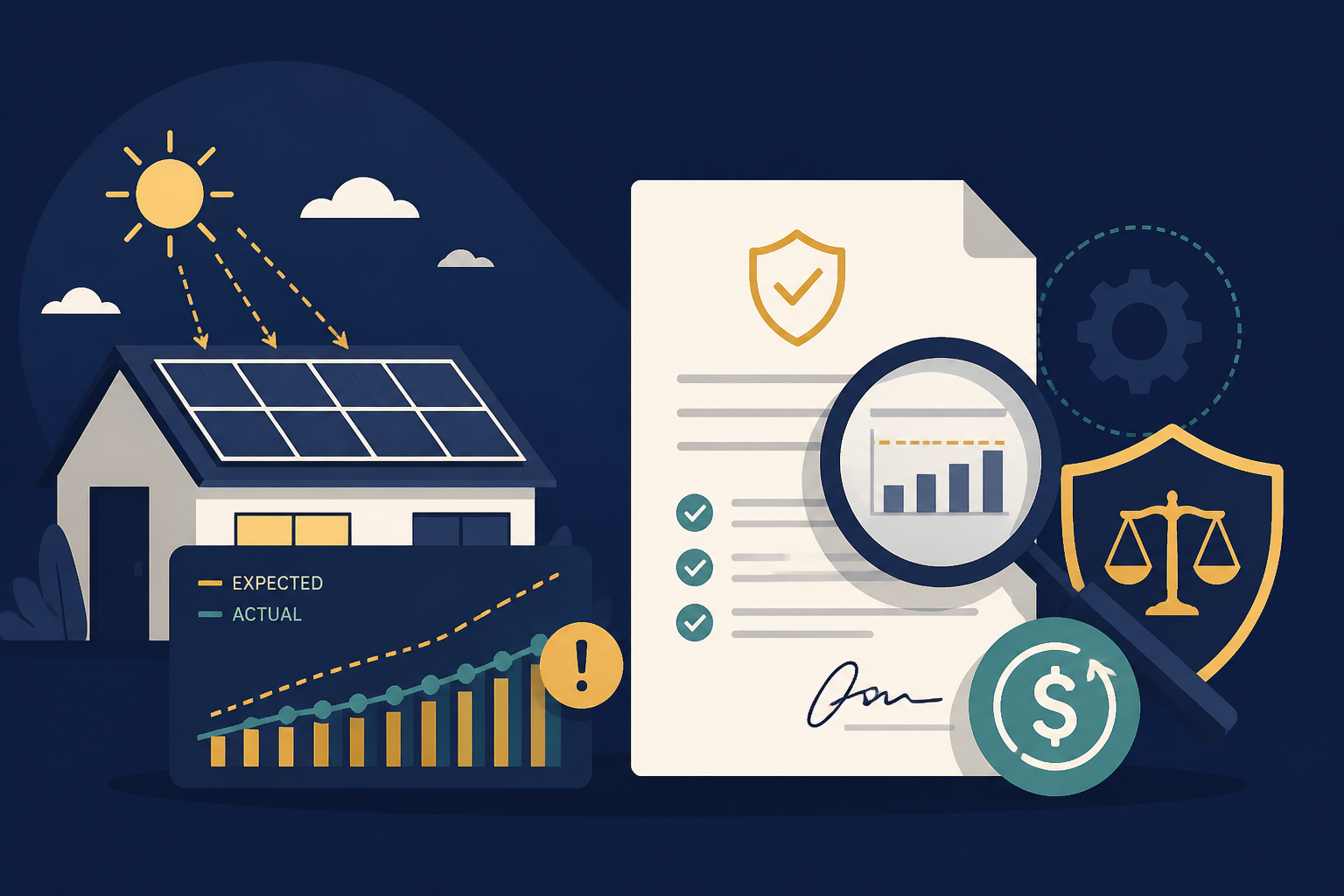
If your solar panels aren't hitting their output targets, you might be owed a refund. This guide explains how to audit your contract and file a production guarantee claim.
Solar Production Guarantees: What Happens if Your System Fails?
When you sign a contract for a home solar installation, you aren’t just buying blue glass and aluminum; you are buying energy. Most reputable installers promise that your system will produce a specific amount of kilowatt-hours (kWh) over a set period. But what happens when the monitored data shows your panels are lagging?
If your utility bill is creeping back up despite a sunny season, it’s time to look at your contract. Understanding how to file a solar panel performance guarantee claim is the difference between a high-ROI investment and a rooftop ornament that doesn't pay for itself.
1. Production vs. Equipment Warranties
Many homeowners confuse a "Product Warranty" with a "Production Guarantee." It is vital to know the difference:
- Equipment/Product Warranty: This covers physical defects. If a panel cracks or an inverter stops working, the manufacturer replaces the hardware.
- Production Guarantee: This is a promise from the installer (or sometimes a third-party financier) that the system will generate a specific amount of electricity (e.g., 10,000 kWh per year).
If your equipment is "working" but producing 30% less than promised due to poor design or shading issues not accounted for in the original quote, the production guarantee is your only safety net.
2. Auditing Your Contract for the "True-Up" Clause
Before you can initiate a solar panel performance guarantee claim, you need to find the "True-Up" period in your contract. Most guarantees are calculated over 2-year, 5-year, or even 10-year cycles.
Check for these three data points:
- The Guaranteed Percentage: Usually, companies guarantee 85% to 95% of the estimated production.
- The Degradation Rate: Panels naturally lose about 0.5% efficiency per year. Your contract should account for this.
- The Payout Rate: If the system under-produces, does the company pay you back at the utility’s retail rate (e.g., $0.15 per kWh) or a flat contracted rate?
3. How to Monitor for Under-Performance
Don't wait for the installer to tell you the system is failing. Most modern systems use monitoring software like Enphase Enlighten or SolarEdge.
Compare your "Estimated Production" from your initial sales proposal against your "Actual Production" shown in the app. If you notice a year-over-year drop that exceeds 1-2%, or if your actuals are consistently 10% below the estimate, you have the grounds for a solar panel performance guarantee claim. Keep monthly screenshots of your production data; these are your primary evidence during a dispute.
4. Steps to File a Solar Panel Performance Guarantee Claim
If the numbers don't add up, follow this professional protocol to ensure you are compensated:
- Step 1: Rule out external factors. High snow cover, unclipped trees, or extreme unusual weather patterns are often "excluded events" in contracts. Ensure your panels are clean and unobstructed.
- Step 2: Request a System Audit. Contact your installer’s service department and ask for a remote diagnostic. Sometimes a single micro-inverter has failed, which is an easy fix.
- Step 3: Formal Written Notice. If the system is running but under-performing, send a formal letter referencing your contract’s production clause. Attach your monitoring reports.
- Step 4: The Settlement. If the installer admits the system is under-producing, they will typically cut you a check for the difference in kWh multiplied by the agreed-upon rate in your contract.
5. Common Exclusions to Watch For
Installers often include "Transfer of Ownership" or "Force Majeure" clauses that can complicate a solar panel performance guarantee claim. For instance, if you sell your home, the new owner may need to officially transfer the guarantee within 30 days to keep it valid. Additionally, if your roof is shaded by a new building next door or a tree you planted after installation, the guarantee is usually voided for that portion of the loss.
Bottom Line
A solar production guarantee is your insurance policy against a bad design or under-performing tech. To protect your investment, review your monitoring app at least once a quarter and keep a copy of your original production estimate. If the sun is shining but your bill is rising, don't hesitate to hold your installer accountable. A successful solar panel performance guarantee claim ensures that the solar company—not you—bears the cost of a system that fails to live up to its promise.