
Does Leaf Shading Void Your Solar Guarantee?
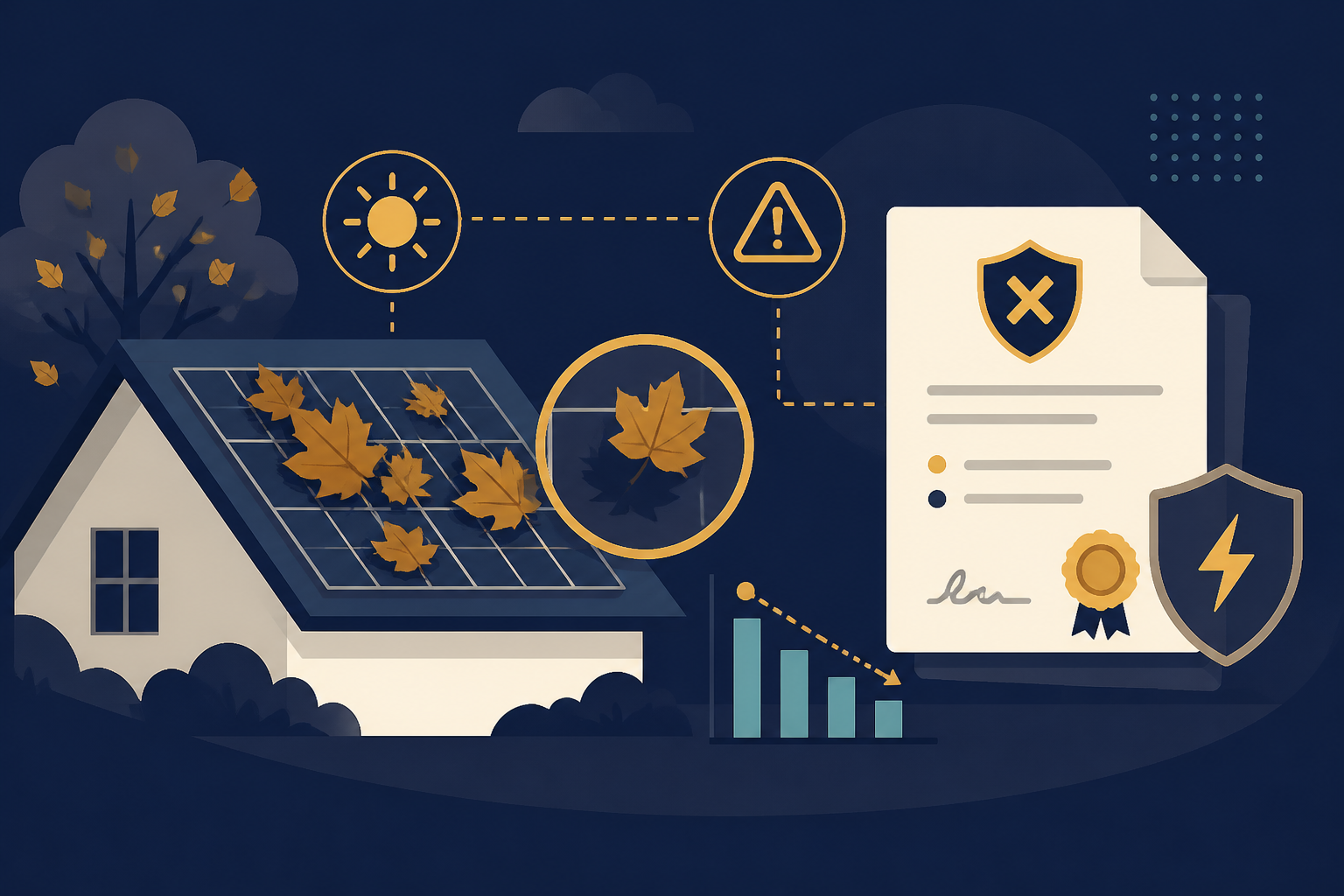
Ignoring those autumn leaves on your roof could cost you more than just a weekend of raking; it might void your solar production guarantee entirely.
Does Leaf Shading Void Your Solar Production Guarantee?
When you sign a contract for a new residential solar system, the "Production Guarantee" is often the biggest selling point. It is a promise from the installer or manufacturer that your panels will produce a specific amount of kilowatt-hours (kWh) over a set period—usually 10 to 25 years. If the system underperforms, the company pays you the difference.
However, these guarantees aren't unconditional. Tucked away in the terms and conditions is almost always a solar panel performance shading clause. While many homeowners worry about cloudy days or snow, the most common culprit for denied claims is actually simple organic debris: autumn leaves.
The Fine Print: What is a Shading Clause?
A production guarantee is based on a "Solar Site Assessment." Before installation, a technician uses tools like a SunEye or LIDAR data to calculate how much sun hits your roof. They account for permanent obstructions like chimneys or neighboring buildings.
However, the solar panel performance shading clause explicitly states that the guarantee is contingent upon the site conditions remaining identical to the day of installation. If a tree grows taller, or if leaves accumulate on the glass, the installer is no longer responsible for the drop in energy production. In the eyes of the contract, the equipment isn't failing; it is being blocked by owner negligence.
How Leaves Impact Your Production Numbers
It doesn’t take a forest to tank your solar output. Modern panels often use "string" configurations where cells are linked together. If a single large maple leaf sticks to one cell, it can act like a kink in a garden hose, reducing the output of the entire panel or even the whole string.
During the autumn months, a buildup of wet leaves and pine needles can reduce efficiency by 10% to 30%. If your production guarantee requires the system to hit 95% of its projected output, a 20% drop caused by debris puts you well below the threshold. If you try to file a claim for a reimbursement check, the first thing the company will do is check the "soiling" and shading logs. If they see debris in your system's monitoring photos, your claim will likely be denied.
The "Maintenance Requirement" Trap
Most solar contracts include a section on "Owner Obligations." This usually stipulates that the homeowner is responsible for keeping the panels clear of obstructions. This includes:
- Trimming Foliage: If a backyard oak grows three feet and casts a new shadow, that is your responsibility to prune.
- Removing Debris: If wind blows leaves onto the array, you are expected to clear them.
- Soiling: In dusty or high-pollen areas, "soiling" (a layer of fine grime) is often excluded from guarantees.
If you ignore a solar panel performance shading clause, you aren't just losing out on a few dollars of electricity; you are potentially voiding the most valuable insurance policy on your green energy investment.
Monitoring vs. Maintenance
How do you know if leaves are the problem? Most modern systems (like Enphase or SolarEdge) offer per-panel monitoring via a smartphone app. If you notice that one or two specific panels are producing significantly less than the ones next to them, it is rarely a hardware failure. Usually, it’s a sign that a clump of leaves or a bird nest is physically blocking the sun.
Installers can see this data too. When a homeowner calls to complain about a low production check, the technician will look at the power curves. If the dip matches the time of year when leaves fall, they will cite the solar panel performance shading clause to deflect the claim.
How to Protect Your Guarantee
You don't need to climb your roof every day, but you should be proactive to keep your contract valid:
- Annual Trimming: Budget for a professional tree service every two years to ensure your "solar window" remains clear.
- Visual Inspections: Use binoculars to check your roof after major windstorms or during the peak of autumn.
- Professional Cleaning: If you have a steep roof, hire a solar cleaning service. They typically charge between $150 and $350, which is often less than the value of the lost production and the voided guarantee.
- Document Everything: If you do clean your panels, keep the receipt. If you later file a production claim, you can prove the underperformance wasn't due to neglect.
Bottom Line
A solar production guarantee is a powerful financial safety net, but it isn't a "set it and forget it" contract. To keep your installer accountable, you must keep your panels clear. The solar panel performance shading clause exists to protect the company from external factors they can't control—like your neighbor's growing trees or a pile of wet leaves. Stay vigilant with your maintenance, and your solar investment will continue to pay for itself for decades to come.